

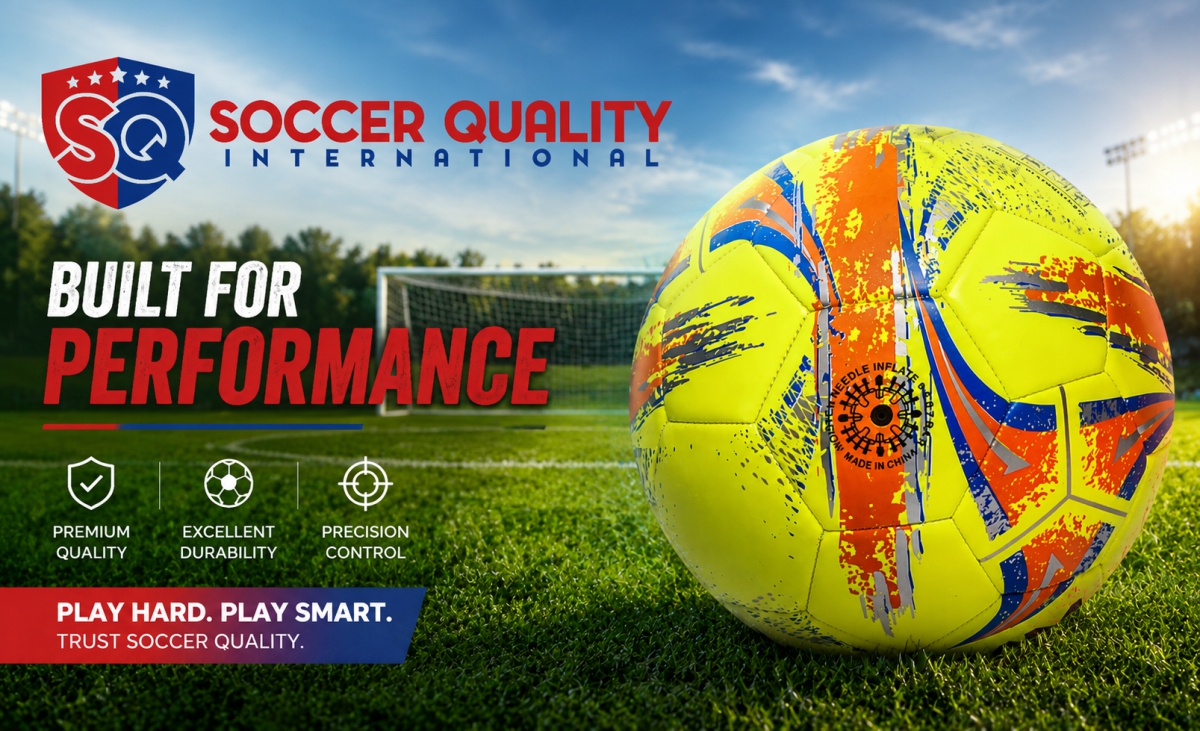
Futsal Ball Harder Than Football is a common question among players. Futsal balls have lower bounce, compact construction, and a different feel for indoor play and close control.
Many players notice that a futsal ball feels different from a football (soccer ball) when they first play with it. Some people even feel that a futsal ball is harder or heavier when they kick it. But is a futsal ball actually harder than a regular football?
The answer depends on what you mean by “harder.” A futsal ball is designed differently from a standard outdoor football. It is generally smaller, has a lower bounce, and is made for fast indoor play on hard courts. These features can make it feel firmer and more controlled, even though its construction and pressure are designed specifically for futsal.
Understanding the differences between a futsal ball and a football can help players, coaches, clubs, schools, and sports buyers choose the right ball for training and matches.
What Is a Futsal Ball?
A futsal ball is specially designed for the indoor version of football known as futsal. Futsal is usually played on a hard indoor court with smaller teams and a smaller playing area than traditional outdoor football.
A standard futsal ball is typically size 4, while a full-size football is generally size 5. The smaller size makes the futsal ball easier to control during quick passes, close dribbling, turns, and technical skills.
One of the most noticeable features of a futsal ball is its low-bounce construction. Instead of bouncing high like a regular football, it stays closer to the ground. This helps players maintain control in a small playing area.
Is a Futsal Ball Actually Harder?
A futsal ball is not necessarily harder in terms of its physical material. However, it can feel harder or firmer when compared with some footballs.
The feeling depends on several factors, including:
- Ball construction
- Internal bladder
- Air pressure
- Outer material
- Foam or fabric layers
- Ball size
- Stitching method
- Playing surface
A futsal ball is designed to provide a controlled response on a hard indoor court. Because of its construction and lower bounce, players may feel that it is more solid when receiving or kicking the ball.
Therefore, saying that every futsal ball is harder than every football would not be accurate. Different models have different materials, pressure levels, and construction methods.
Futsal Ball vs Football Size
One of the biggest differences between the two balls is size.
A traditional football used for adult matches is normally size 5. A futsal ball is generally size 4, making it smaller and easier to control in tight spaces.
The smaller size is particularly useful because futsal involves:
- Quick passing
- Close ball control
- Short movements
- Fast changes of direction
- Frequent touches
- Technical skills
The size difference can also affect how the ball feels when you kick it. A smaller futsal ball can feel more compact and firm compared with a larger outdoor football.
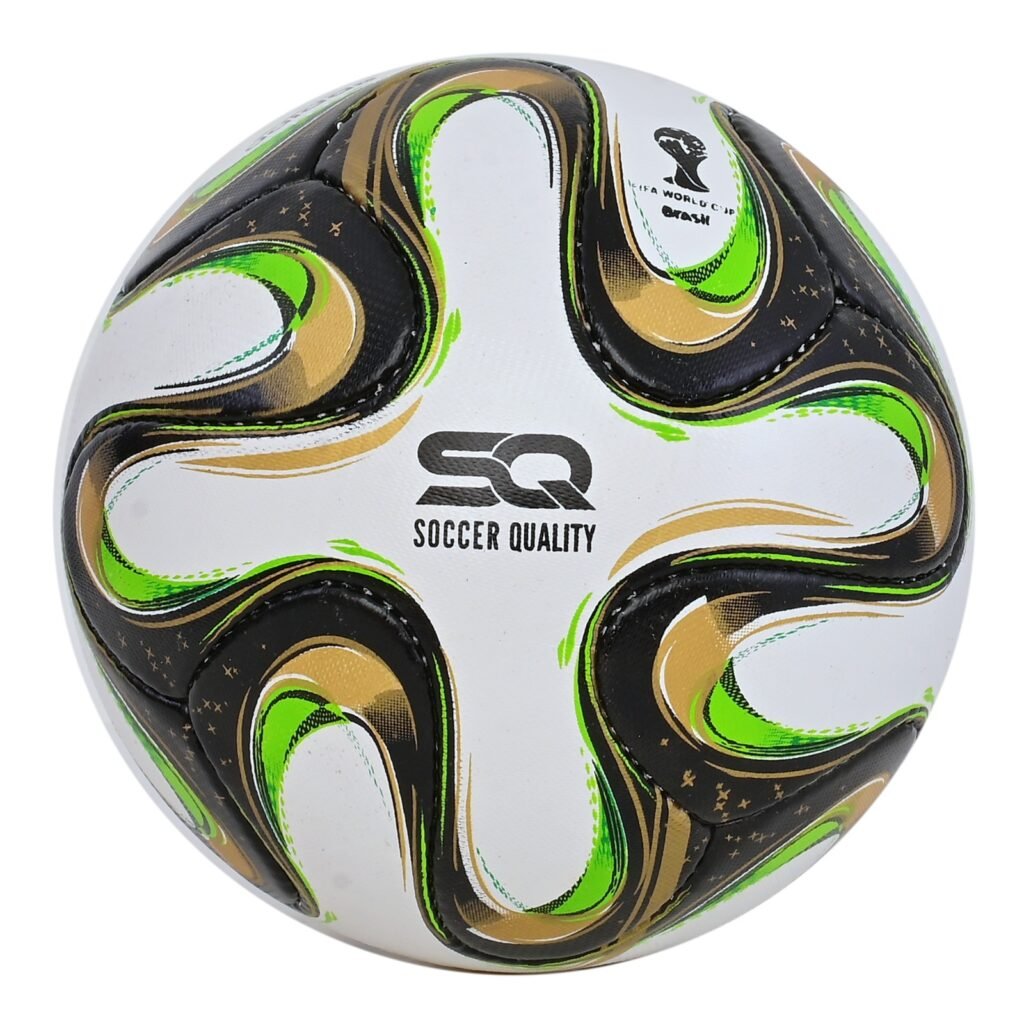
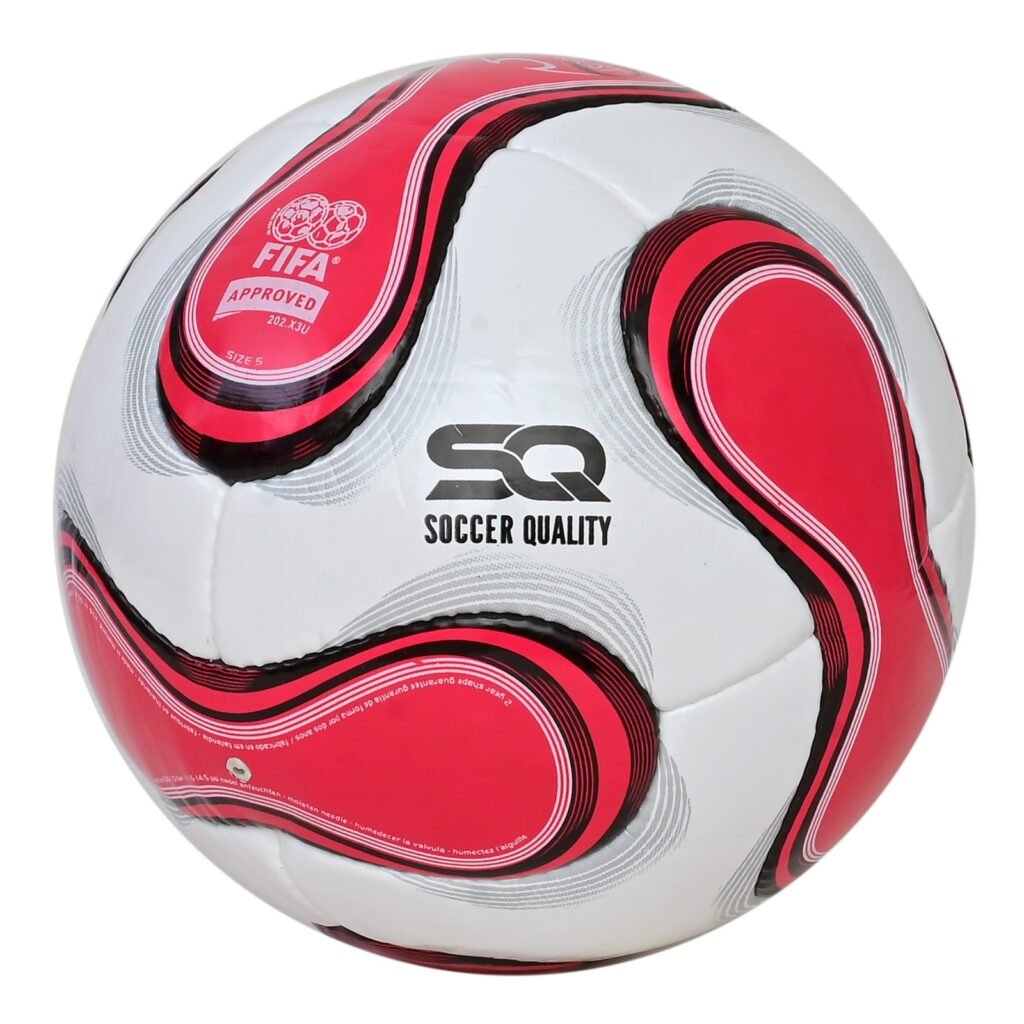
Why Does a Futsal Ball Bounce Less?
The low bounce is one of the most important characteristics of a futsal ball.
Outdoor football is played on grass or artificial turf, where the ball needs to travel across a larger surface. Futsal is played on a hard indoor court, so excessive bounce would make the game more difficult to control.
A futsal ball is therefore designed to reduce rebound and keep the ball closer to the playing surface.
This allows players to perform controlled passes and quick touches without waiting for the ball to come back down after every bounce.
The low-bounce design does not necessarily mean the ball is harder. Instead, it means the ball has been engineered for the specific requirements of indoor play.
Futsal Ball Pressure and Football Pressure
Air pressure also affects how hard a ball feels.
If a ball is inflated to a higher pressure, it can feel firmer when kicked or received. A ball with lower pressure can feel softer and may absorb more impact.
Futsal balls are designed to meet the requirements of the game, including controlled bounce and handling. Footballs used outdoors can have different pressure characteristics depending on the competition, ball model, and manufacturer.
This is why it is important to follow the manufacturer’s recommended inflation pressure instead of judging a ball only by how hard it feels.
Overinflating a futsal ball can change its performance and may make it feel unnecessarily hard.
Futsal Ball Construction
The construction of a futsal ball also influences how it feels.
Quality futsal balls can be produced using materials such as PU, TPU, PVC, foam layers, fabric lining, and rubber or butyl bladders. Different manufacturers use different combinations depending on whether the ball is intended for training, competition, academies, clubs, or recreational use.
Some futsal balls include additional internal layers that help improve shape retention and reduce excessive rebound.
The outer casing also affects touch. PU is often used in quality sports balls because it can provide a soft and responsive surface, while other materials may be selected for durability and cost-effectiveness.
Why Futsal Balls Feel Different When You Kick Them
Players often notice the difference immediately when switching from football to futsal.
A futsal ball is smaller and has a lower-bounce design. This combination can make the ball feel more solid under the foot.
When you kick a futsal ball, the response may feel different because you are dealing with:
- A smaller ball diameter
- Different internal construction
- Lower rebound
- Different air pressure
- A hard court surface
The difference is especially noticeable during powerful shots. On an indoor court, the ball can stay lower and travel differently compared with a football played on grass.
Is Futsal Ball Harder Than Football?
Although a futsal ball is smaller, its weight can be similar to or within a comparable range to some footballs depending on the specific standard and model.
This is another reason why players may initially find a futsal ball unusual. It combines a smaller size with a design focused on low bounce and close control.
The important point is that size and weight are not the same thing. A smaller ball does not automatically mean a much lighter ball.
When purchasing futsal balls, buyers should check the manufacturer’s listed size, weight, circumference, pressure, and intended use.
Futsal Ball vs Soccer Ball for Training
Both types of balls can be useful for training, but they are designed for different environments.
A football is suitable for outdoor training on grass or artificial turf. It is commonly used for passing drills, shooting practice, tactical exercises, and match preparation.
A futsal ball is better suited to indoor courts and technical training. Because it has lower bounce and a smaller size, it can encourage players to focus on close control, quick passing, first touch, and decision-making.
Coaches may use futsal as a training method because the smaller playing environment encourages players to interact with the ball frequently.
Which Ball Is Better for Indoor Football?
For indoor football or futsal, a proper futsal ball is generally designed for the playing environment.
Using a standard outdoor football indoors can result in a different bounce and response. A futsal ball provides the characteristics needed for the indoor game, including controlled rebound and close handling.
Clubs, academies, schools, and training centres should select balls according to the surface and type of football being played.
For regular futsal training, purchasing dedicated training futsal balls can also be useful because they are designed for repeated use and practice sessions.
Does a Harder Ball Improve Futsal Performance?
A harder-feeling ball does not automatically improve performance.
Futsal requires a balance between:
- Ball control
- Touch
- Rebound
- Durability
- Shape retention
- Shooting response
- Passing accuracy
A ball that is excessively hard may feel uncomfortable and can make control more difficult. On the other hand, a ball that is too soft may not provide the desired response during passing and shooting.
The best approach is to use a properly inflated futsal ball that meets the specifications for the intended level of play.
Choosing the Right Futsal Ball
When buying a futsal ball, consider more than how hard it feels.
Look at the following specifications:
Size: Most standard futsal balls are size 4.
Weight: Check the manufacturer’s specifications for the intended competition or training level.
Material: PU, TPU, and other synthetic materials can provide different touch and durability characteristics.
Bladder: Rubber and butyl bladder options can affect air retention and ball response.
Construction: Hand-stitched and machine-stitched balls can offer different performance and durability characteristics.
Bounce: Choose a low-bounce design intended for futsal.
Playing surface: Make sure the ball is suitable for indoor courts and the type of training being performed.
Futsal Ball for Clubs, Academies, and Bulk Buyers
Clubs and academies often need several balls for regular training sessions. In this situation, wholesale futsal balls can provide a practical solution.
Bulk buyers can also look for custom futsal balls featuring team logos, academy branding, club colours, or private-label designs.
For sports brands and distributors, working with a custom futsal ball manufacturer can provide options for product specifications, branding, packaging, and larger production orders.
When purchasing in bulk, buyers should check consistency in size, weight, stitching, materials, bladder quality, printing, and overall construction.
Final Thoughts
So, is a futsal ball harder than football? Not necessarily. A futsal ball may feel firmer because of its smaller size, low-bounce construction, internal materials, and intended playing conditions.
The main difference is not simply hardness. Futsal balls are engineered for indoor courts, close control, quick passing, and reduced bounce, while standard footballs are designed primarily for outdoor play on grass or artificial surfaces.
If you are playing futsal, choosing a purpose-built futsal ball is important. For clubs, academies, schools, distributors, and sports brands, understanding the differences between futsal balls and footballs can also help when selecting products for training, competition, or wholesale supply.
A quality futsal ball should provide the right balance of control, durability, touch, weight, low bounce, and consistent performance for the level of play.